
Seeking stronger returns, GPIF aims to accelerate property investments
Japan’s Government Pension Investment Fund, the world’s largest pension fund, is taking a more active approach to its alternative investments, including real estate, under its newly revised medium- to long-term plan.
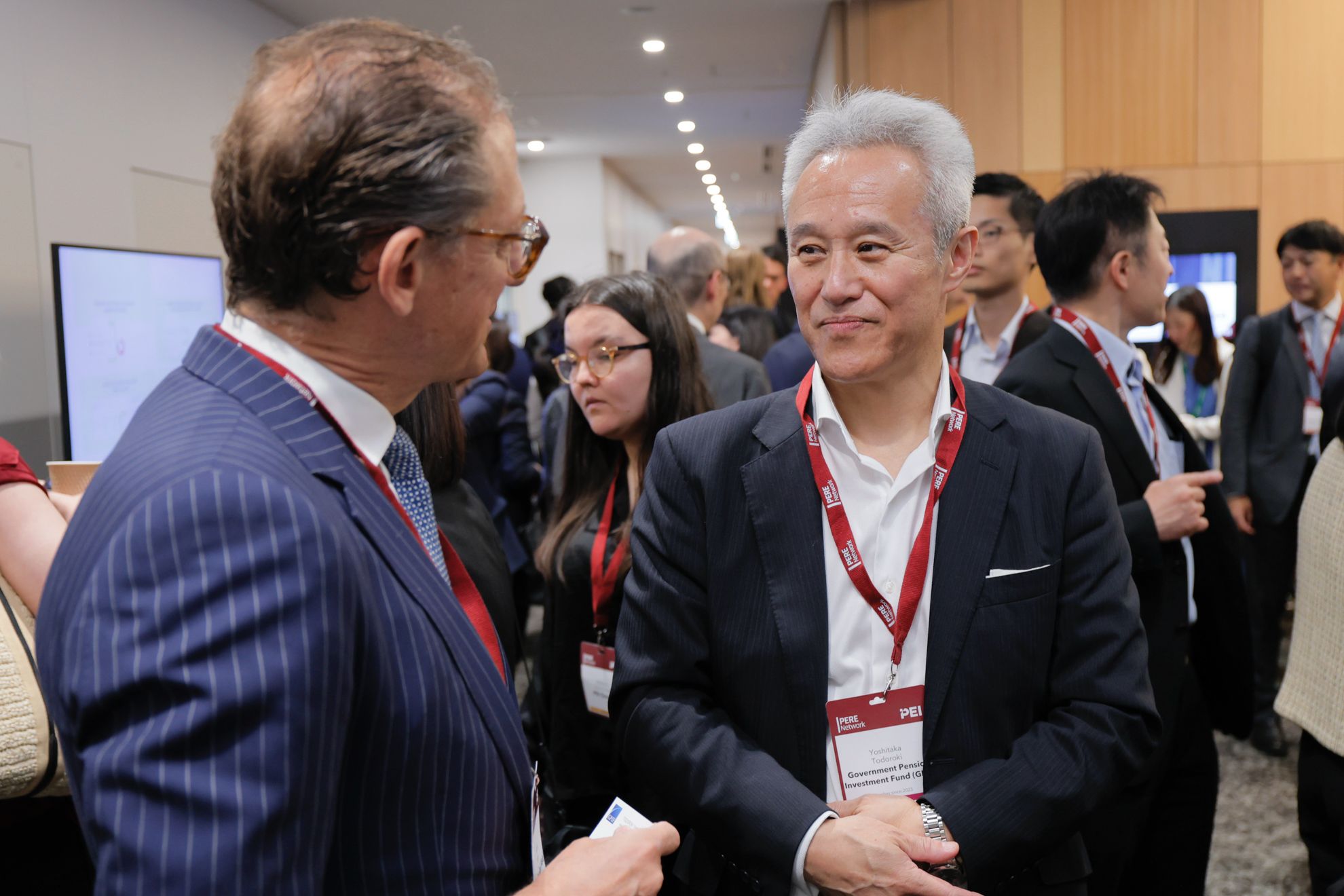
Yoshitaka Todoroki, managing director of GPIF’s private market investment department, shared updates on that shift in a keynote speech at the PERE Tokyo Forum 2025 on Thursday, highlighting a transition from growing “cautiously” to “steadily” as the pension seeks higher returns, in part through increased exposure to real estate.
The pension fund’s latest medium-to-long term plan, published in April, highlights a growing emphasis on alternatives to deliver “excess return.” The investor, which has ¥246 trillion ($1.696 trillion; €1.481 trillion) in total assets under management, has raised the long-term return target for its entire portfolio from 1.7 percent to 1.9 percent above the nominal wage growth rate. While limited to 5 percent of its total AUM, GPIF’s alternatives allocation currently stands at 1.65 percent.
Real estate remains a key pillar of its alternative investment strategy, as Todoroki emphasized in his speech. The fund plans to further expand its real estate portfolio, with a heightened focus on non-core funds to boost overall returns.
To ensure performance alignment, the pension’s global real estate investments will be benchmarked against foreign equities and bonds, such as the MSCI ACWI and the FTSE WGBI, Todoroki said. Meanwhile, Japanese real estate mandates will be measured against domestic benchmarks, including TOPIX and the Nomura Bond Performance Index.
When it began investing in private real estate in 2017, GPIF started by adopting a multi-manager strategy, partnering with Mitsubishi UFJ Trust Bank, CBRE Investment Management, and LaSalle Investment Management. By 2023, the fund expanded further, committing $500 million each to real estate managers Blackstone and Brookfield.
According to GPIF’s latest annual report, the fund increased its real estate assets under management by 27 percent over the full fiscal year 2023, rising from JP¥919 billion ($6.5 billion) to JP¥1.165 trillion as of March 31, 2024.
GPIF’s approach to real estate is shaped by its ability to adapt to external challenges and market shifts, he said. With its office allocation, which accounts for 25 percent of the property portfolio, the investor has focused on non-traditional assets like medical office rather than standard office buildings. “We have little exposure to traditional offices, which helped minimize portfolio impact during the pandemic,” Todoroki noted.
Meanwhile, logistics assets make up 45 percent of GPIF’s real estate portfolio. However, Todoroki was cautious about potential disruptions there as well, in this case due to tariffs and other geopolitical factors.
Amid global market fluctuations, Todoroki views domestic real estate as a reliable and stable investment. “Japan’s real estate market has been progressing steadily compared to the volatility of overseas mandates,” he remarked. Between the fiscal years 2019 and 2024 (ending March 31 each year), the IRR since inception for domestic real estate investments rose from 2.3 percent to 7.27 percent, according to his presentation. It remained consistently around 7 percent during the fiscal years 2022 to 2024, as highlighted in Todoroki’s keynote presentation.
In contrast, the fund’s global real estate investments experienced more pronounced volatility. The since-inception IRR for GPIF’s overseas investments reached a peak of 16.17 percent in the fiscal year 2022 before declining sharply to 10.93 percent in the fiscal year 2024 amid the fallout from the pandemic and rising interest rates, according to the presentation.
Going forward, Todoroki will be picking his investments carefully and paying close attention to valuation movements and transactions in the domestic market, he said. “In the Japanese market, interest rate hikes may potentially impact cap rates, while rental increases can be observed in gateway locations.”
link