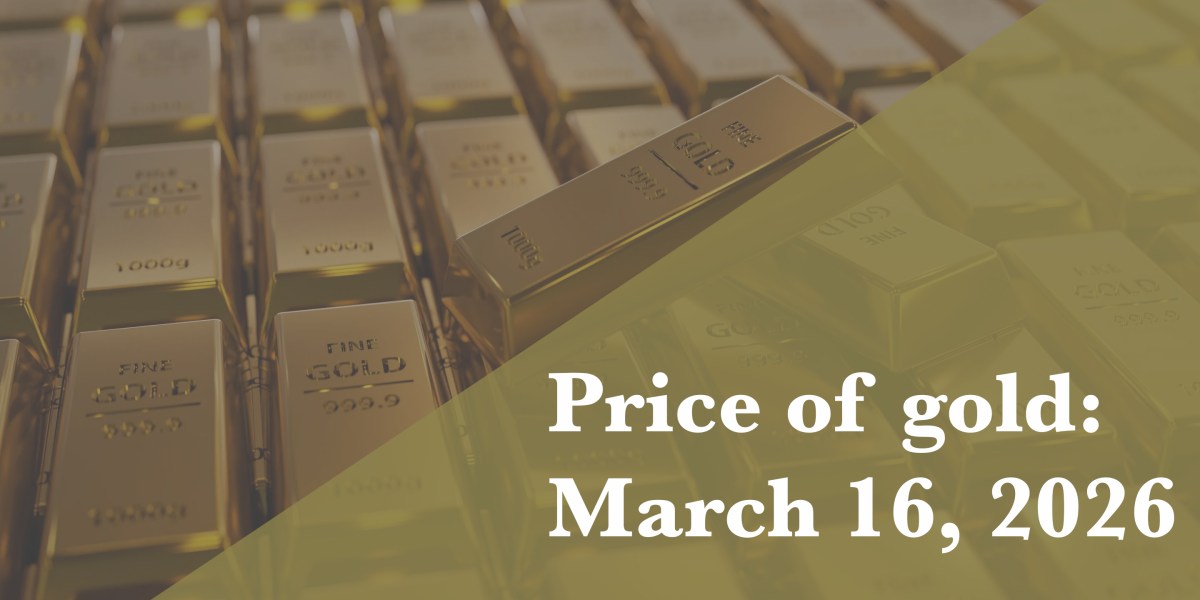
Should you join the gold rush?

Neil McEvoy has always liked buying gold but decided to add to his stash of sovereign coins four months ago on a hunch that the price was likely to head skyward.
And he wasn’t wrong. On Wednesday gold rose above $4,000 (£2,980) a troy ounce, hitting a record high and making gains of more than 50 per cent this year.
The price had climbed steadily for two years but has rocketed since August as investors have become spooked over political instability, economic uncertainty and stubborn inflation. Gold is seen as a safe haven investment in times of volatility.
“I thought the price was likely to go up. Any sign of trouble and people tend to run towards gold,” said McEvoy, 67, from Edinburgh. “I bought five coins this year and I now have 15 or 16. The original coins I bought for £90 15 years ago are worth about £700 each.”
McEvoy’s latest hoard cost him £3,500. His main motive was to diversify his investments — he has a pension and investment portfolio exposed to the stock market, and said he didn’t have time to hang around and wait for a recovery if there was a big market crash.
• Gordon Brown’s gold sale has cost Britain $47bn
Russ Mould from the investment platform AJ Bell said that as well as being a safe haven, gold was also seen as a hedge against a loss of control by policy makers. He suggested that rising government debts in the West, war in eastern Europe and the Middle East, and high inflation would be encouraging “gold bugs” to buy more.
McEvoy said: “Having that tangible metal means that if there’s a crash or an institutional failure, then I still have it.”

Neil McEvoy: “I bought five coins this year and now have 15 or 16 worth about £700 each”
The World Gold Council, a trade association, said there was a 50 per cent increase in demand for gold bars in the first half of 2025 compared with the same period last year. Some 6.9 tonnes of gold bars and coins were bought in the UK.
John Reade from the council said the appeal was strong “because gold acts as a powerful, long-term hedge against inflation, preserving purchasing power when cash savings struggle to keep pace”.
How to buy gold
Most investors buy gold through investment funds, typically exchange-traded funds (ETFs), which are cheap trackers that aim to replicate the price of gold. They are bought and sold on the stock market and can be held in your Isa or pension. A popular option is the iShares Physical Gold ETC, which has a 0.12 per cent fee.
Or you could choose to buy the real thing, most commonly sold as bullion coins or gold bars. One vendor is the Royal Mint, the UK’s official maker of coins. At the moment single coins start at £240 up to about £3,200, while a 1g gold bar is £125 and the biggest the Royal Mint sells, a 1kg bar, costs about £99,000.
There is also one unlikely outlet where you could pop a bit of bullion in your online basket along with 600 teabags and 40 toilet rolls — Costco. The wholesale retailer began selling gold coins and bars last year. Shoppers can take an order slip to the store office or those buying online can have the gold shipped to their home.
You can trade gold bars or coins on the secondary market with another investor but this comes with authenticity and quality risks. Josh Newton, from west London, has about 10 per cent of his portfolio invested in gold, both physical and in ETFs.
He uses a broker and also buys bullion from the Royal Mint. He reinvests about twice a year and said there is something magical about buying gold. He has investments in silver, copper, uranium and even hydrogen, but it’s the gold he plans to hold on to and pass down.
“It is less volatile than silver and I want to give it to my children because I think it’s special in a way that silver isn’t.”
• Why Gen Z are investing in gold
The practicalities
Buying physical gold comes with some practical hurdles. First, you need to store it. Dealers often offer secure vaults, with storage and insurance costs. Some banks have safety deposit boxes, but they are becoming less common.
If you keep it at home in a safe, then expect your contents insurance premium to shoot up. If you have a large amount, you may need specialist valuables insurance.
Tom Becket from the investment firm Canaccord Wealth said: “This all adds to the cost of holding physical gold. It is very illiquid, so selling it isn’t as smooth as selling holdings in an ETF. There’s also risk of theft or loss.”
You could own gold digitally — where you buy gold via the Royal Mint or other gold dealers or brokers, and it is stored there. You would never physically hold it but you would benefit from any price gains.
Can you spend the coins?
Some gold coins might be considered legal tender but this doesn’t mean you can use them in the supermarket. Gold coins that are produced by the Royal Mint cannot be used as money in everyday life but owning such coins does have a tax benefit. Anything classified as British legal currency is exempt from capital gains tax (CGT). Other physical gold, such as gold bars or non-Royal Mint coins, are subject to CGT.
When the time comes to sell your gold, using a reputable dealer is the simplest option. Look at the market price, and be prepared to pay a small commission.
There are groups on social media where private buyers and sellers can connect, but there will be security risks so be extremely cautious.
All that glitters …
Just because gold is seen as a safe haven asset — and its price tends to go up as the stock market goes down, so it can be a good diversifier in your portfolio — this does not mean that it isn’t volatile.
On Wednesday the Bank of England warned that the risk of a “sharp correction” in the financial markets had increased amid concerns of an AI bubble. Typically, demand for gold surges as investors get more anxious about the stock market.
Michael Paul from Henley-in-Arden in Warwickshire has between 60 and 70 per cent of his investment portfolio in gold, but said such a big weighting was unlikely to be for everyone.
Paul, 75, a retired financial adviser and banker, sold his shares in Lloyds Bank to buy more gold via a gold tracker fund because he is expecting a “big financial storm ahead”. “Gold investing is not for the faint-hearted or the inexperienced. You have to be aware that it could turn the other way.
“At the moment it’s a poor day if you don’t make a quarter of a per cent, but that’s not normal.”
The gold price rose dramatically from October 2008 to August 2011, around the financial crisis, but that enthusiasm quickly fell away and it had dropped about 30 per cent by the end of 2015. It took until June 2020 for the price to recover to its 2011 peak.
Becket said price volatility was part of the deal with gold. “As interest rates rise, the US dollar strengthens, geopolitical situations improve, and confidence returns, the price will be negatively affected. And gold doesn’t pay an income, so returns are solely dependent on the price going up.”
link